


Chimney Repair · New Jersey

Chimney Repair
Before It Becomes a Rebuild

Legacy Peak Roofing & Construction repairs all forms of chimney deterioration across New Jersey — cracked crowns, failed flashing, spalling brick, mortar joint erosion, liner damage, and structural emergencies. Our licensed masonry crews are headquartered in Monmouth County and dispatch same-day for active structural failures. Free inspection included.

Same-Day Response · Structural Emergencies Licensed NJ Masonry Contractor Free Inspection — No Obligation
  • NJ-Based
  • Free Estimates

Active Leak Right Now?

  1. Move valuables and contain the water

    Clear the area beneath the leak. Place buckets or towels to protect floors, furniture, and any nearby electrical panels or fixtures.

  2. Do not attempt to access the roof

    Wet roofing surfaces are extremely hazardous. Leave structural assessment and emergency tarping to our licensed crew — we carry the right equipment and insurance for it.

  3. Call our 24/7 emergency dispatch

    We'll walk you through immediate stabilisation steps and dispatch a crew to your property — same day, every day, across New Jersey.

Emergency Dispatch · 24 / 7

(732) 558-4135

Same-Day Response · Monmouth County & All NJ

Damage Diagnosis

Types of Chimney Damage We Repair

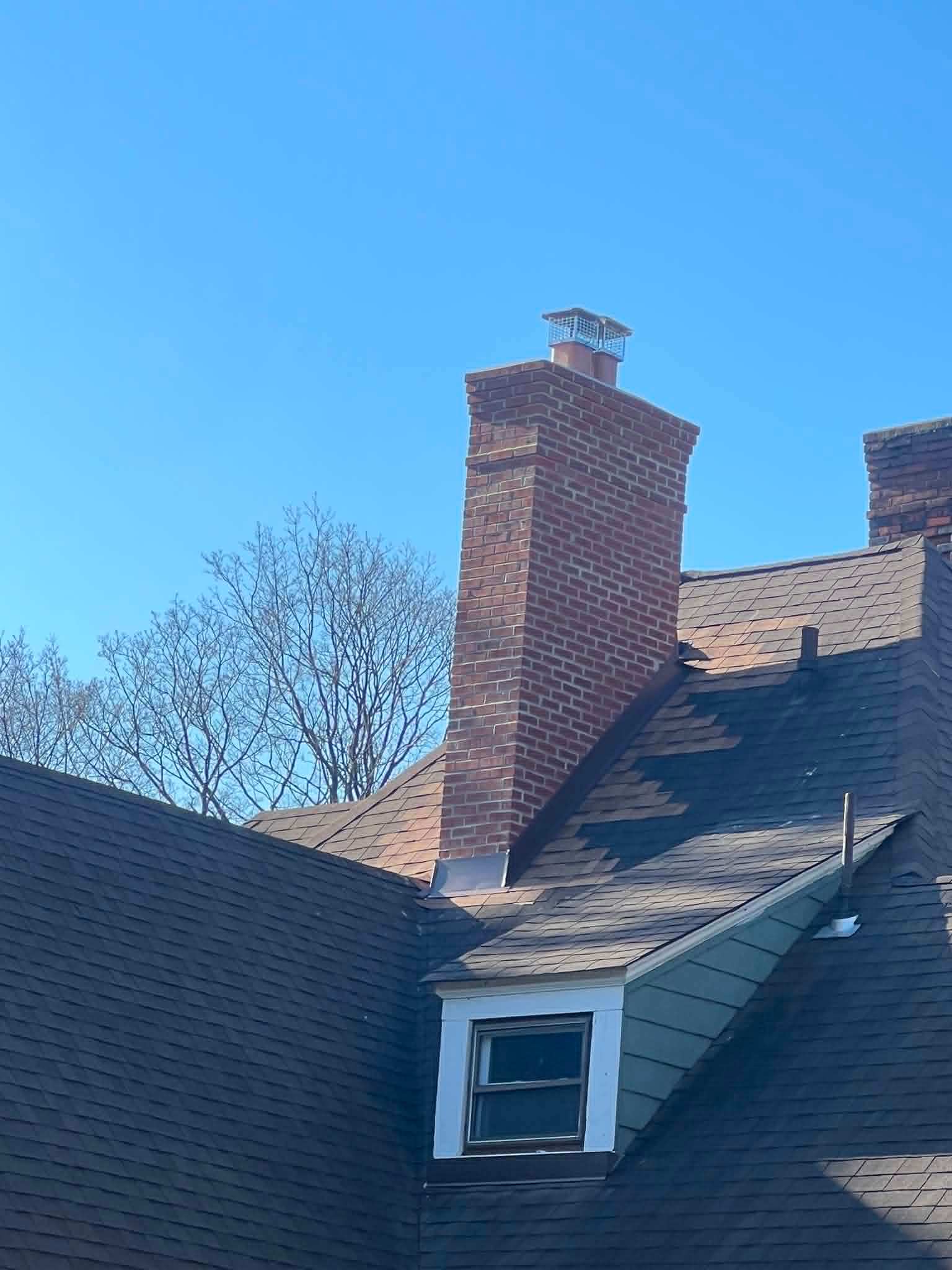
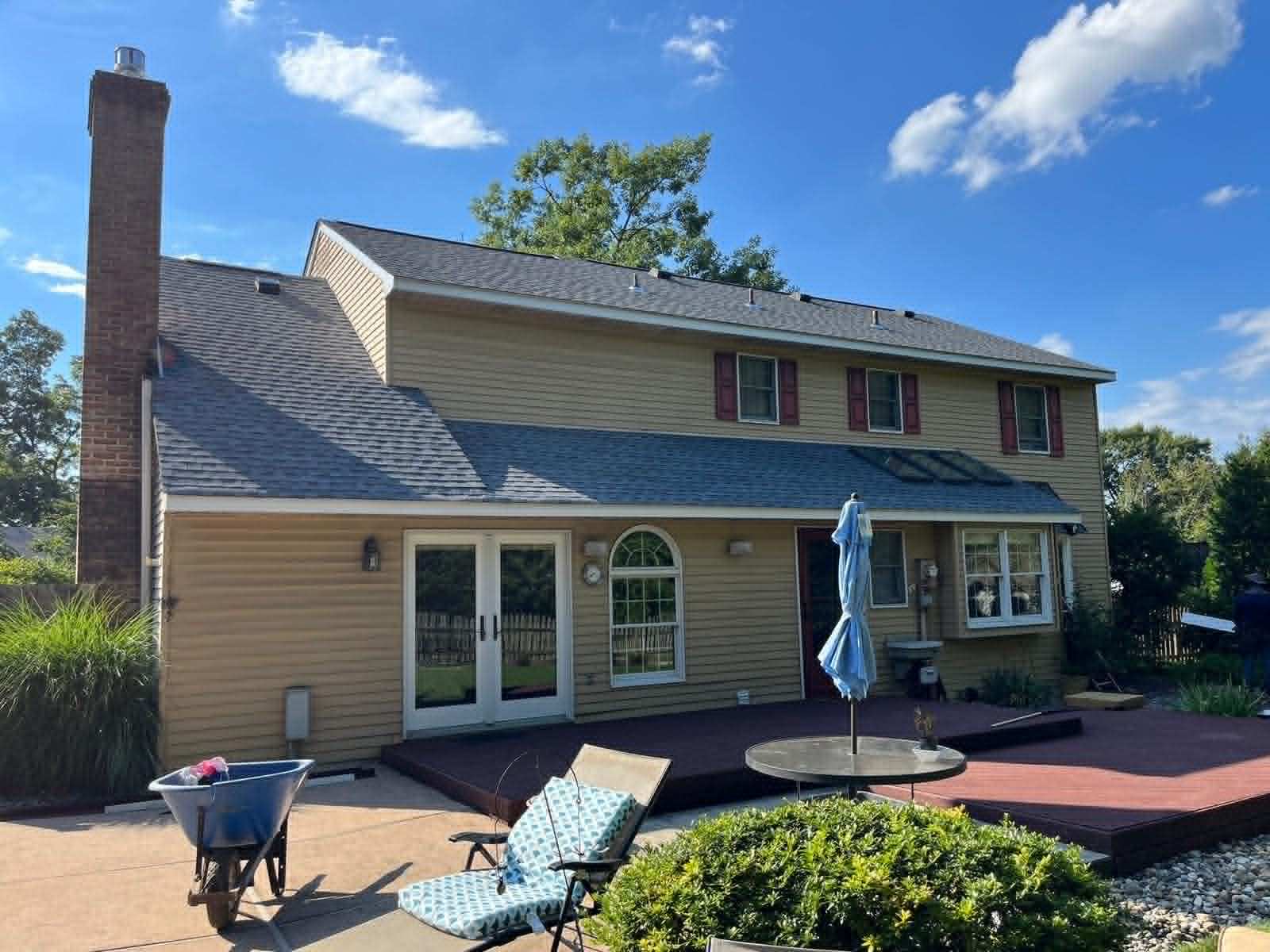
Legacy Peak Roofing & Construction diagnoses and repairs all forms of chimney deterioration in New Jersey — from isolated crown failures and flashing leaks to full tuckpointing scopes and structural stabilization. We recommend repair when repair is the correct solution, and we do not recommend rebuilds to increase invoice value.

  • Spalling Brick & Mortar Deterioration

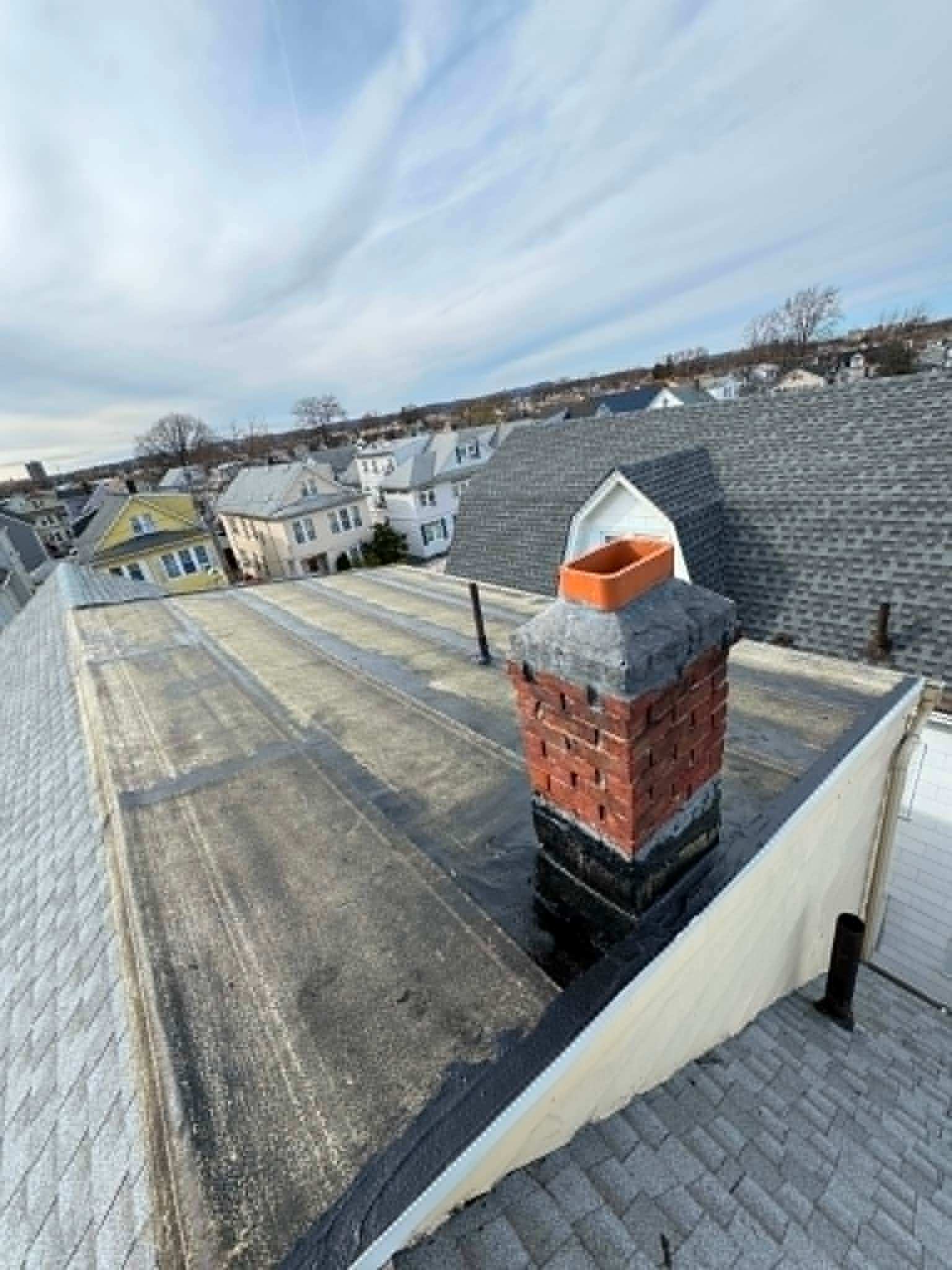
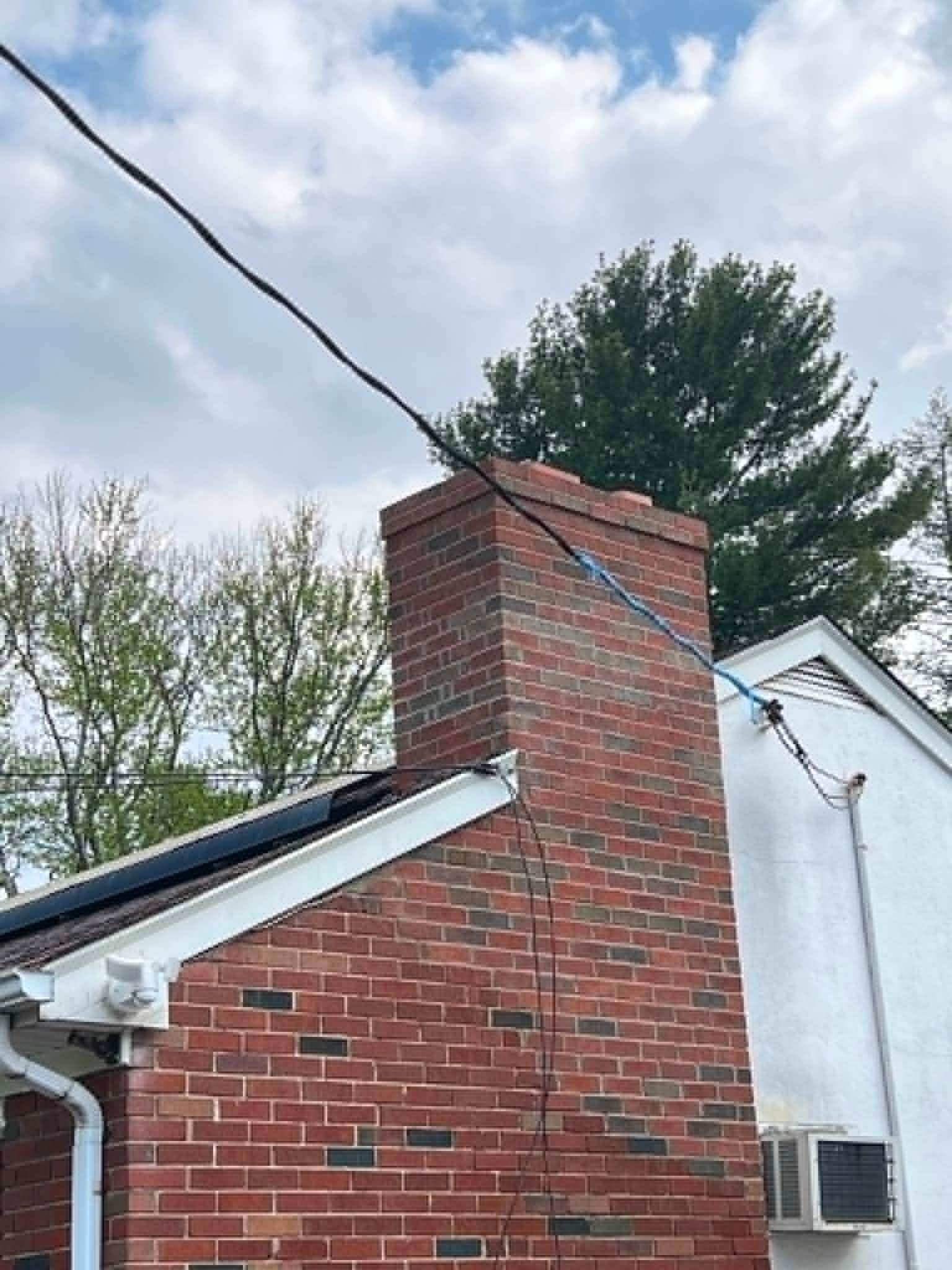
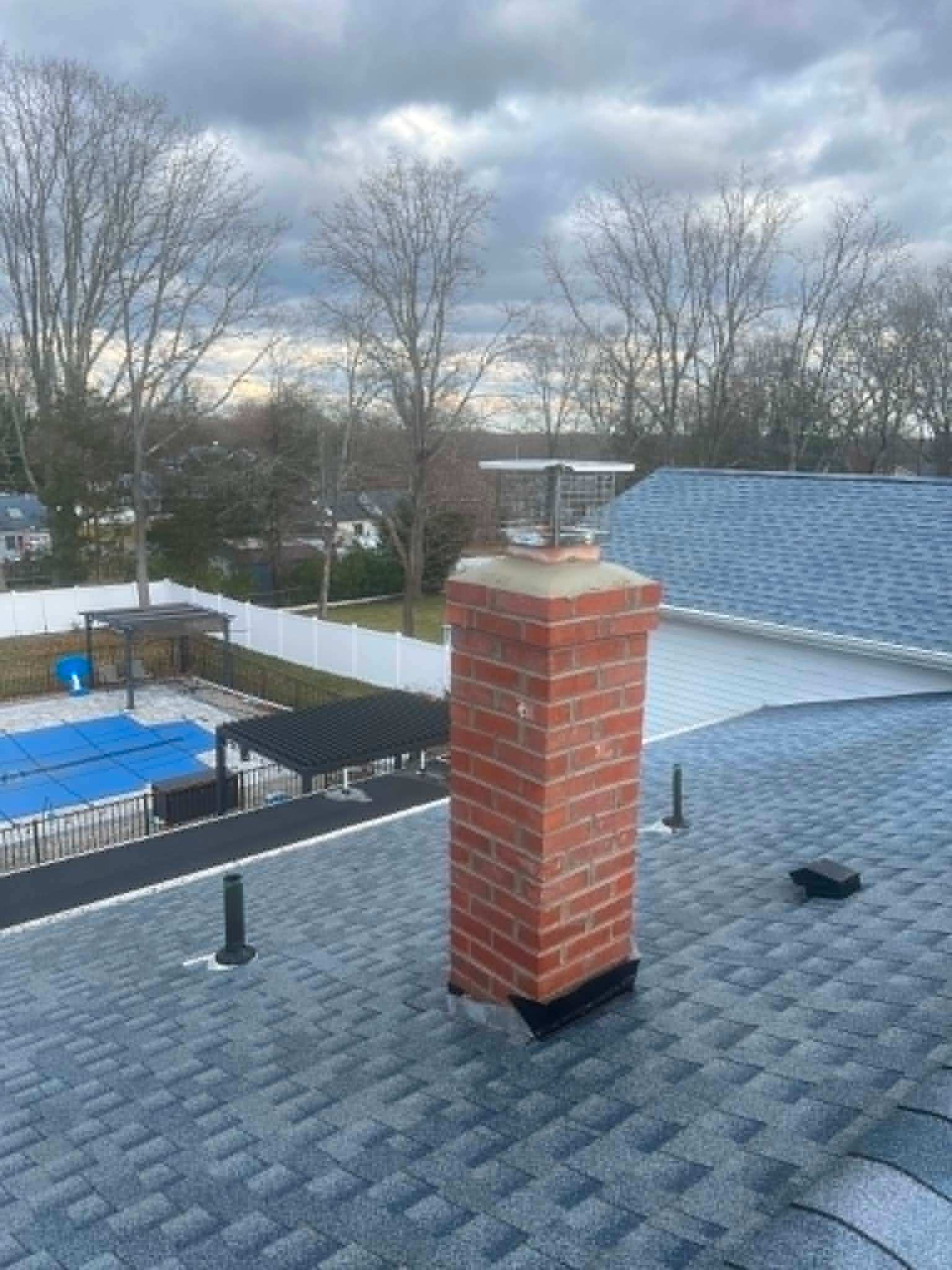
    Water penetrates masonry, then freeze-thaw expansion fractures brick faces and dislodges mortar joints. Once spalling begins, structural integrity degrades with every rain cycle. Early intervention — unit replacement and surface sealing — prevents the progressive face-loss that escalates a repair into a full chimney rebuild.
  • Cracked or Failed Chimney Crown

    The concrete crown caps the masonry opening and redirects water away from the flue liner. Crown cracking allows water direct access to the brick core — the most common and most preventable source of interior chimney moisture. A timely crown repair or replacement arrests the damage cycle before it reaches the liner.

  • Flashing Failure & Water Infiltration

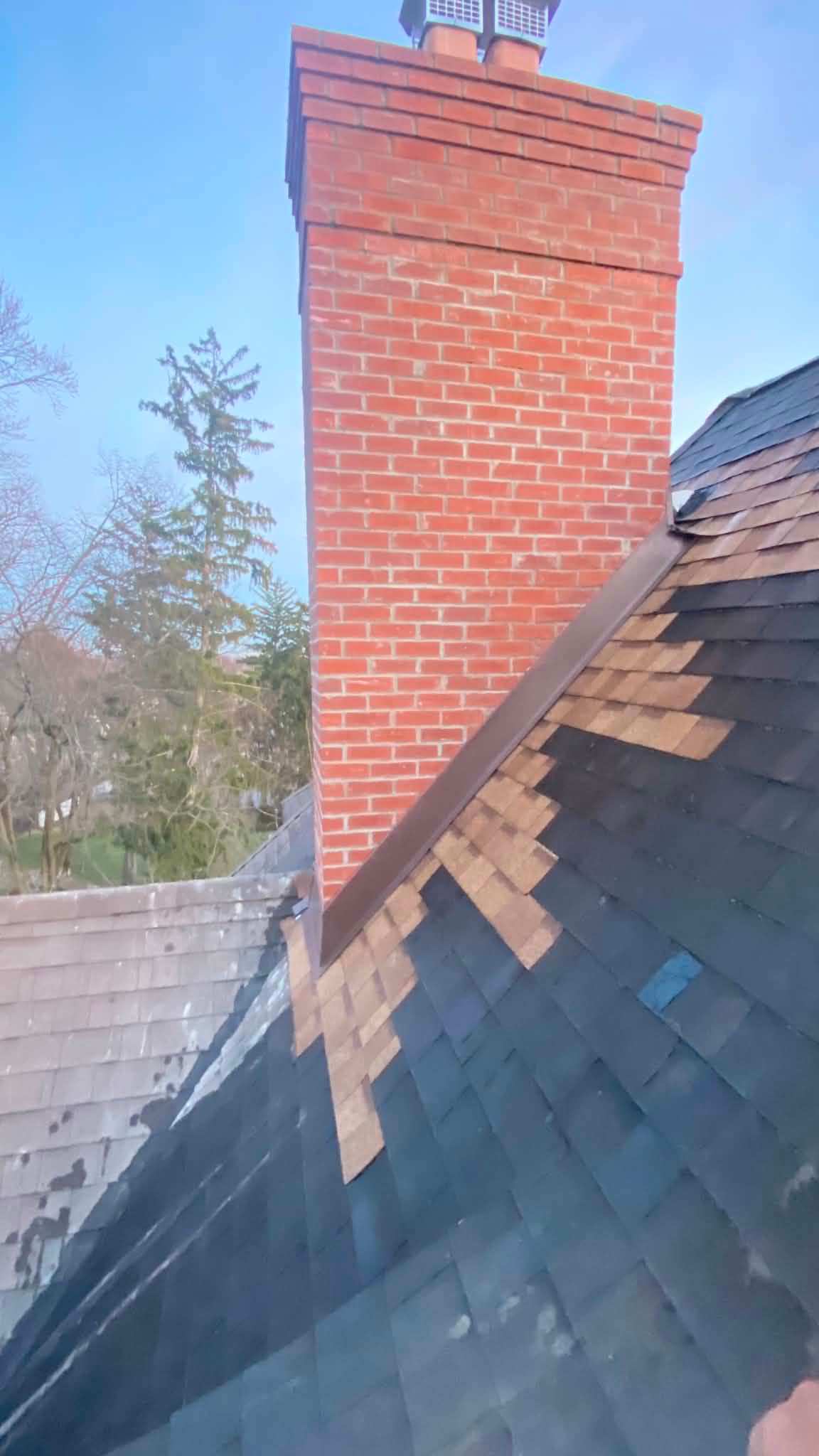
    Step and counter-flashing at the chimney-roofline junction fails through separation, corrosion, and improper original installation. When flashing fails, water bypasses the shingle field entirely and enters the attic or wall cavity — often without any visible exterior sign. Targeted flashing repair resolves most chimney-area interior leaks.

  • Mortar Joint Erosion — Tuckpointing

    Mortar joints erode before the brick itself — typically after 25-35 years in New Jersey's climate. Deteriorated joints expose the brick core to direct moisture intrusion. Tuckpointing removes degraded mortar to a consistent depth and packs fresh mortar — restoring the moisture barrier and extending the masonry structure's service life.

  • Leaning or Separating Structure

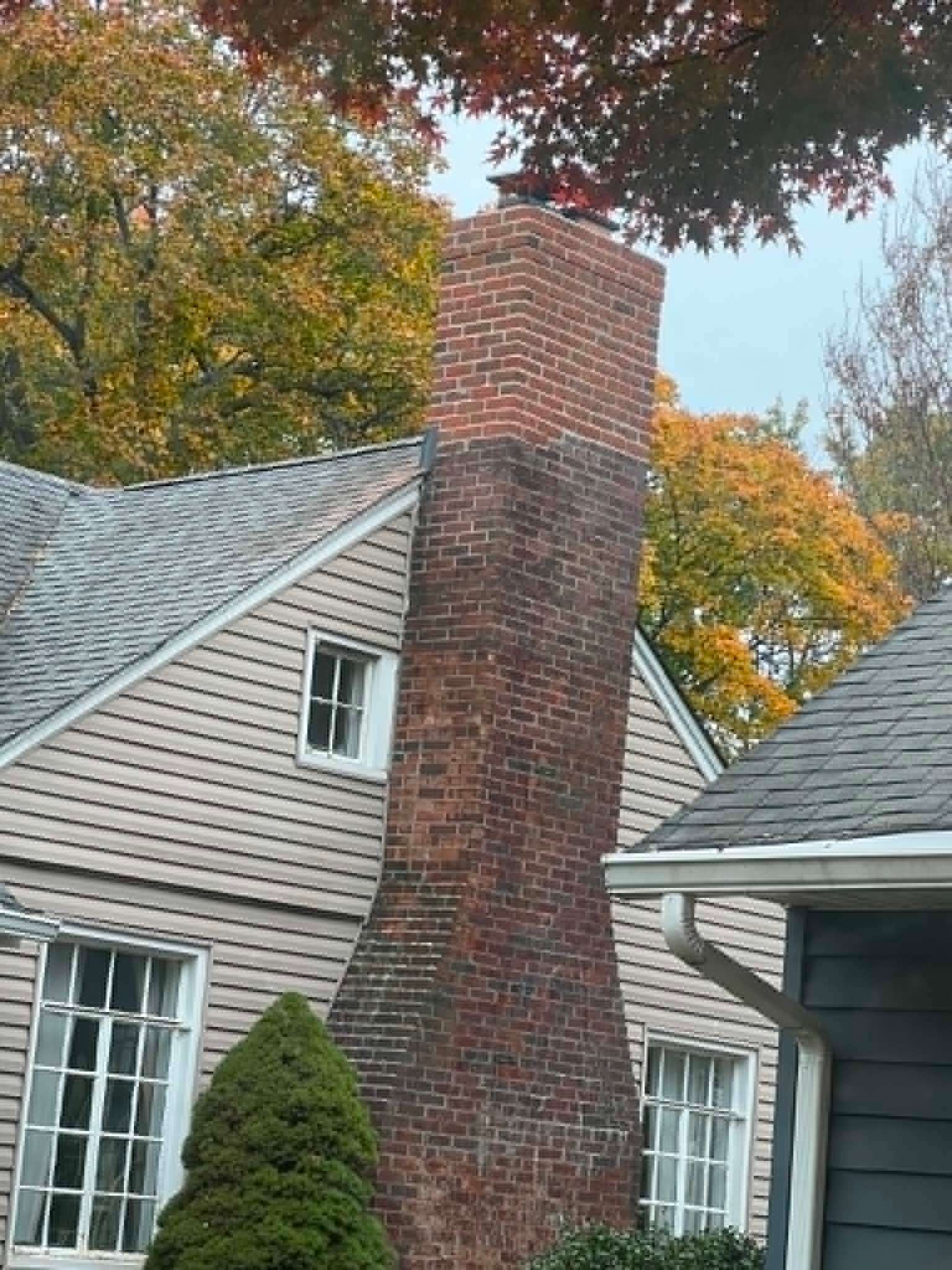
    A chimney separating from the roofline or showing visible lean is a structural emergency. Foundation settlement, anchor failure, or sustained moisture damage at the base can drive progressive displacement. Emergency stabilization and a structural assessment must precede any cosmetic or surface-level repair work.

  • Liner Damage & Combustion Hazard

    A cracked or deteriorated terra cotta flue liner allows combustion gases — including carbon monoxide — to transfer through masonry into living spaces. Stainless steel liner installation eliminates this pathway and restores the draft performance required for safe wood-burning or gas appliance operation. A liner failure is not a cosmetic issue.

The Honest Assessment

Repair or Replace? A Framework That Doesn't Favor Either Answer

The right answer depends on your roof's age, the extent of damage, and the condition of the underlying structure. Below is the same decision framework our estimators use on every inspection — laid out plainly, without a vested interest in pushing you either direction.

When Repair Is the Right Move

  1. Roof Is Under 15 Years Old

    A structurally sound system that has sustained isolated damage does not warrant full replacement. Targeted repair restores performance at a fraction of the cost and preserves years of remaining service life.

  2. Damage Is Localized to One Area

    A failed flashing, wind-lifted section, or minor valley leak affecting less than 25–30% of the total surface is a repair scenario. When the rest of the system performs, surgical repair is the professional call.

  3. Decking Is Dry and Structurally Sound

    If a thorough inspection confirms the underlying deck and framing are undamaged, there is no structural justification for a full tear-off. A quality repair will restore the weatherproofing layer effectively.

  4. Repair Buys 5–10 Years on Your Terms

    In some cases the right move is a well-executed repair that extends service life — allowing you to plan a full replacement on your financial terms rather than under emergency conditions.

When Replacement Is the Honest Call

  1. Roof Is 20+ Years Old

    Most asphalt shingle systems have a 20–25 year service life in New Jersey's climate. Beyond that threshold, repairs address symptoms rather than the underlying problem — replacement is the financially sound long-term decision.

  2. Multiple Leak Points or Systemic Granule Loss

    When leaks appear across multiple areas or granule loss is visible across the full surface, the membrane has failed systemically. Repairs will not restore performance — they will only delay an inevitable replacement at a higher eventual cost.

  3. Damaged or Saturated Decking

    Once moisture has compromised the structural deck, a full tear-off is the only professional option. Installing new roofing over rotten or saturated decking accelerates failure and voids manufacturer warranties.

  4. Repair Cost Exceeds 40% of Replacement

    When a repair quote approaches or exceeds 40% of a full replacement cost, replacement delivers substantially better value — especially when a new system resets the warranty clock and eliminates the repair cycle.

Client Experiences

The Standard Speaks for Itself

I had Legacy Peak come out for a chimney repair and they did a great job. They explained everything clearly, showed me what needed to be fixed, and didn't try to upsell anything unnecessary. Danny was awesome to deal with — very down-to-earth and easy to reach whenever I had a question. Would definitely recommend.

Frank Gomez

Chimney Repair

After dealing with a few other companies that were hard to communicate with and didn't really help fix my issues, I'm really glad I found Legacy Peak Roofing & Construction. They took the time to understand what was going on and clearly explained the best way to handle it. The crew was professional, showed up on time, and got everything done without any hassle. The whole experience was smooth and stress-free, and the quality of the work really shows. Danny the owner was great.

Albina Kica

Roof & Masonry Work

Legacy Peak were the only ones to notice the actual source of the damage on the first inspection. The crew was respectful and polite, and the cleanup was the best I have ever seen. I would definitely recommend them to all my family and friends.

Ehat Kica

Masonry & Roofing

Common Questions

Chimney Repair — What You Need to Know

Answers to the most common questions we receive from New Jersey homeowners dealing with visible chimney deterioration, active leaks, and structural concerns.

Is a cracked chimney crown a serious problem?

Yes. The crown is the primary water barrier for the masonry below. A cracked crown allows water to penetrate the brick core directly — accelerating freeze-thaw spalling, saturating the liner, and driving interior moisture. A cracked crown that is not repaired will require increasingly expensive intervention with every season. Crown replacement is one of the most cost-effective chimney repairs available.

Does homeowners insurance cover chimney repair in New Jersey?

Coverage depends on the cause of damage. Storm-related failures — fallen debris, wind damage, or lightning strikes — are typically covered under standard NJ homeowner policies. Age-related deterioration and deferred maintenance are generally excluded. Legacy Peak documents all findings with photographs at the inspection, which strengthens any insurance claim for a covered event.

How much does chimney repair cost in New Jersey?

Chimney repair cost depends entirely on what is failing and to what extent — a targeted crown replacement, a full tuckpointing scope, liner installation, and emergency structural stabilization are categorically different projects. We do not publish price ranges because scope cannot be determined without a site inspection. A free estimate delivers a written repair proposal — typically within 24 hours of the visit.

What is tuckpointing and how do I know if I need it?

Tuckpointing is the process of removing deteriorated mortar joints from masonry to a consistent depth and re-packing with fresh mortar. You need it if the mortar between your bricks is crumbling, eroding, or missing in sections — visible as recessed or powdery joint lines. Deteriorated mortar is the single most common entry point for water into chimney masonry. Most NJ chimneys require tuckpointing within 25-35 years of original installation.

How quickly can Legacy Peak respond to an emergency chimney situation?

We operate a 24/7 emergency dispatch line. For active structural emergencies — a visible lean, separation from the roofline, or a failure following a storm — same-day response is our standard across Monmouth County and surrounding NJ areas. Stabilization and containment take priority over cosmetic assessment on emergency calls.

Can you repair chimney flashing without rebuilding the entire chimney?

Yes — in the majority of cases, flashing failure is an isolated repair. Step flashing, counter-flashing, and saddle flashing at the chimney-roofline junction can be removed and replaced without disturbing the masonry above or the shingle field adjacent to the chimney. Flashing repair typically resolves interior moisture traced to the chimney-roofline junction.