$850 Off Chimney Rebuild — offer valid through this month.

Chimney Rebuild · New Jersey

Chimney Rebuild
Taken Down and Built Back Right

Legacy Peak Roofing & Construction rebuilds leaning, spalling, and cracked chimneys across New Jersey — down to sound masonry, back up plumb with matched brick or stone. Free inspection and written proposal.

Licensed NJ Masonry Contractor Permits Filed & Inspections Handled Free Inspection — Written Proposal
  • NJ-Based
  • Free Estimates

Structural Diagnosis

Signs Your Chimney Needs a Rebuild

Legacy Peak Roofing & Construction handles chimney rebuild and chimney replacement work throughout New Jersey — Monmouth, Ocean, Middlesex, Mercer, Morris, Essex, and Bergen counties. If you are searching for a chimney rebuild near you, these are the six conditions our masons look for on an inspection, and the ones that separate a structure that can still be repaired from one that has to be replaced.

  • A Leaning or Separating Chimney

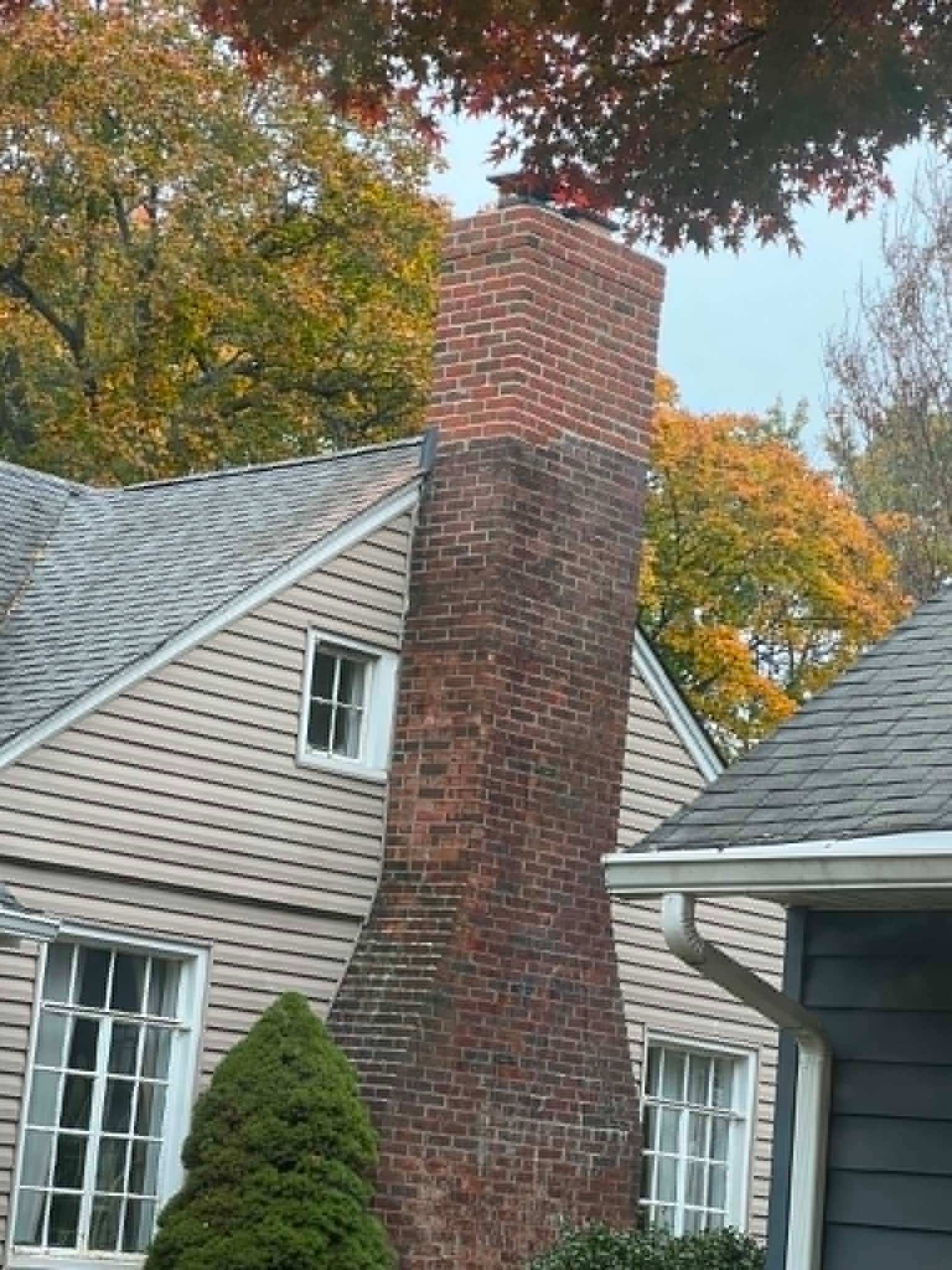
    A chimney pulling away from the house, or visibly out of plumb against the roofline, has lost the structural integrity holding it upright. The cause is usually footing settlement, corroded anchors, or years of moisture breaking down the masonry at the base. You cannot fix a leaning chimney with surface work — the stack has to come down to sound material and go back up straight. We stabilize first, then rebuild.
  • Spalling, Crumbling, and Loose Brick

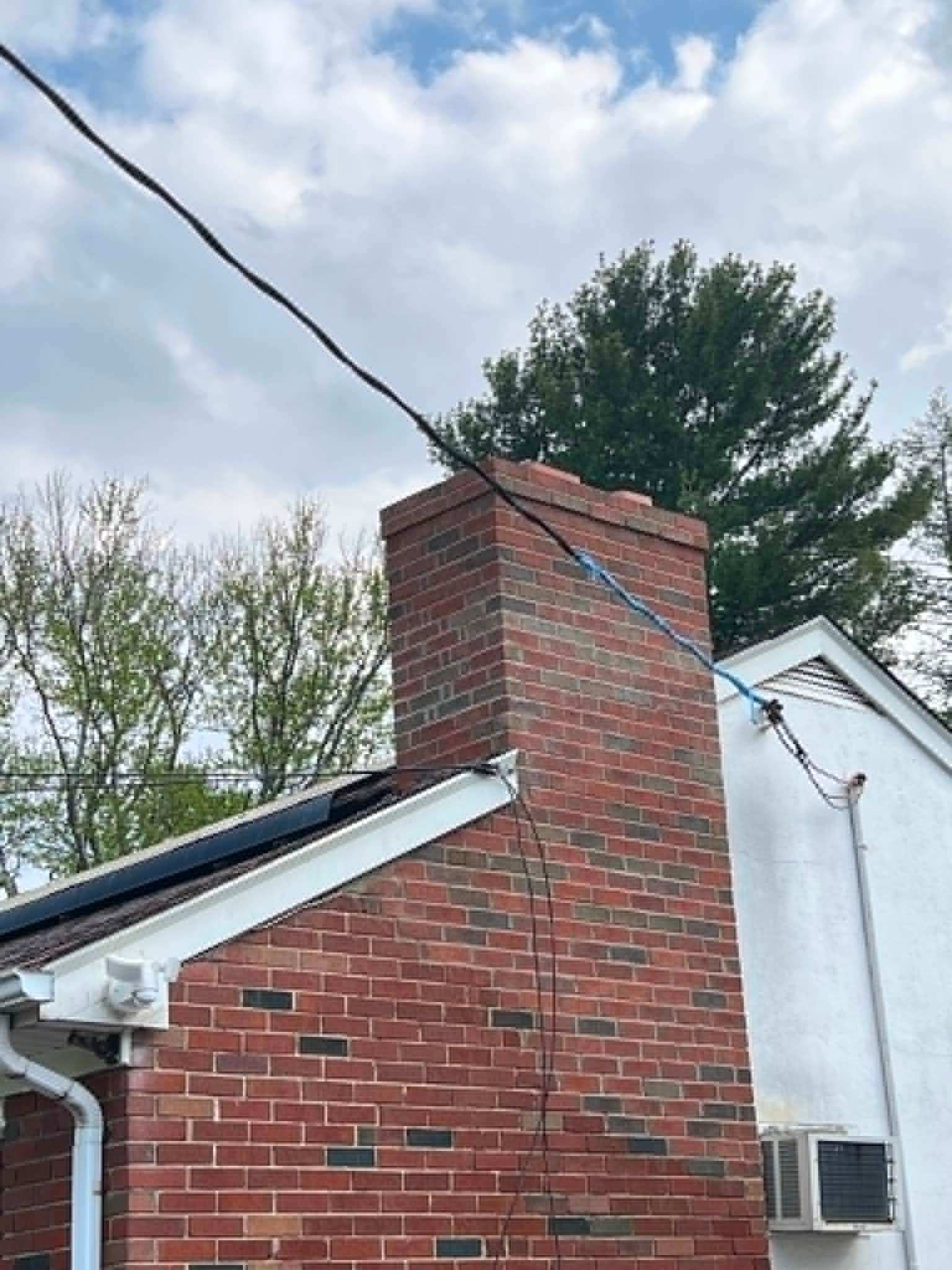
    Brick faces popping off, sandy debris collecting on the roof, units you can move by hand. Once water has been cycling through the masonry for enough winters, the brick itself is spent — and no amount of repointing restores a unit that has already delaminated. When spalling covers a broad section of the stack, replacement of the masonry is the only durable answer.

  • Structural Cracking Through the Stack

    Stair-step cracks tracking through mortar joints, a vertical split running the height of the chimney, or a gap opening where the chimney meets the wall. Chimney structure repair at this stage is a load-path question, not a cosmetic one. We assess whether the damage terminates above the roofline or continues down into the concealed portion before proposing any scope.

  • A Failed Crown With Water in the Core

    The crown is the concrete cap that keeps water out of the masonry below it. Once it fractures, water runs directly into the core of the chimney and freezes there every winter. A crown replaced early is an inexpensive repair. A crown left cracked for a decade is what turns a sound chimney into a rebuild — the damage is already inside the structure by the time it shows on the outside.

  • Water Reaching the Firebox or Living Space

    Staining on the ceiling around the chimney chase, white efflorescence bleeding through interior brick, a damp firebox, or a smell of soot after rain. Water inside the living space means the masonry is no longer shedding it — and the flue liner is usually compromised as well. We trace the entry point before quoting, because flashing failure and masonry failure look identical from inside the house.

  • Repairs That Did Not Hold

    A chimney that has been repointed twice and is deteriorating again is telling you the substrate is finished. Fresh mortar packed against failing brick has nothing sound to bond to, which is why the third repair fails faster than the second. When you have already paid for repairs that did not last, a rebuild is usually the cheaper decision measured over any real timeline.

The Honest Assessment

Tuckpointing or Rebuild? A Framework That Doesn't Favor Either Answer

The right call depends on the condition of the masonry units themselves, the depth of mortar deterioration, and whether moisture has reached the liner or firebox. Below is the same decision framework our masons use on every inspection — laid out plainly, without a vested interest in the more expensive outcome.

When Tuckpointing Restores the Work

  1. Mortar Joints Are Weathered, Not Cracked Through

    Surface erosion of mortar joints up to 25–30mm deep — visible as recessed or sandy-faced joints — is a tuckpointing scenario. The masonry unit is still intact; only the pointing requires removal and replacement.

  2. Bricks and Stone Units Are Structurally Sound

    When the masonry units themselves show no cracking, spalling, or structural displacement, the chimney does not warrant section-by-section replacement. Quality tuckpointing with period-accurate mortar restores weatherproofing and extends service life by 15–25 years.

  3. System Is Under 25 Years Old With No Prior Failures

    A relatively young chimney exhibiting normal mortar weathering from NJ freeze-thaw cycles, without history of moisture intrusion or fire damage, is a strong tuckpointing candidate. The masonry structure is sound — only the pointing has reached its maintenance interval.

  4. Crown Damage Is Cosmetic — Hairline Cracking Only

    Small hairline cracks in the chimney crown can be sealed with elastomeric crown sealer or a targeted crown rebuild without requiring work on the chimney body. If the crown is the only point of moisture entry, a targeted crown repair is the proportionate response.

When Full Rebuild Is the Sound Decision

  1. Spalling Bricks or Delaminating Stone Units

    When the masonry units themselves are failing — faces popping off bricks, stone faces delaminating, through-cracks across individual units — the structural integrity of that section is compromised. Tuckpointing addresses mortar, not the unit. Affected sections require complete rebuilding.

  2. Visible Structural Lean or Separation From the House

    Any visible displacement of the chimney stack — lean, lateral shift, or opening at the flashing line between the chimney and roof — indicates a structural failure beyond what tuckpointing can address. This is a full-section rebuild scenario and a potential safety hazard.

  3. Water Penetrating Into the Firebox or Living Space

    Active moisture inside the firebox or water staining on the breast wall above the mantle signals a failed liner, crown, or masonry system that is beyond surface repair. A camera inspection of the flue is required to determine the full extent before any rebuild scope is defined.

  4. Multiple Failed Tuckpointing Cycles

    When tuckpointing has been performed repeatedly and the new mortar will not hold — crazing, cracking, or popping out within one to two seasons — the substrate has deteriorated beyond the reach of surface repair. The underlying masonry units must be replaced for any repair to hold.

Our Process

How a Chimney Rebuild Is Done

  1. Structural Assessment & Written Scope

    We inspect the stack from the roof, not from the driveway, and photograph every finding. The assessment establishes how far the failure extends — whether the sound masonry starts just below the crown, at the roofline, or further down inside the chase. That depth determines the scope, and the scope determines the price. You receive a written, itemized proposal within 24 hours, and nothing is scheduled until you approve it. We file the township permit as part of the project.

  2. Controlled Teardown to Sound Masonry

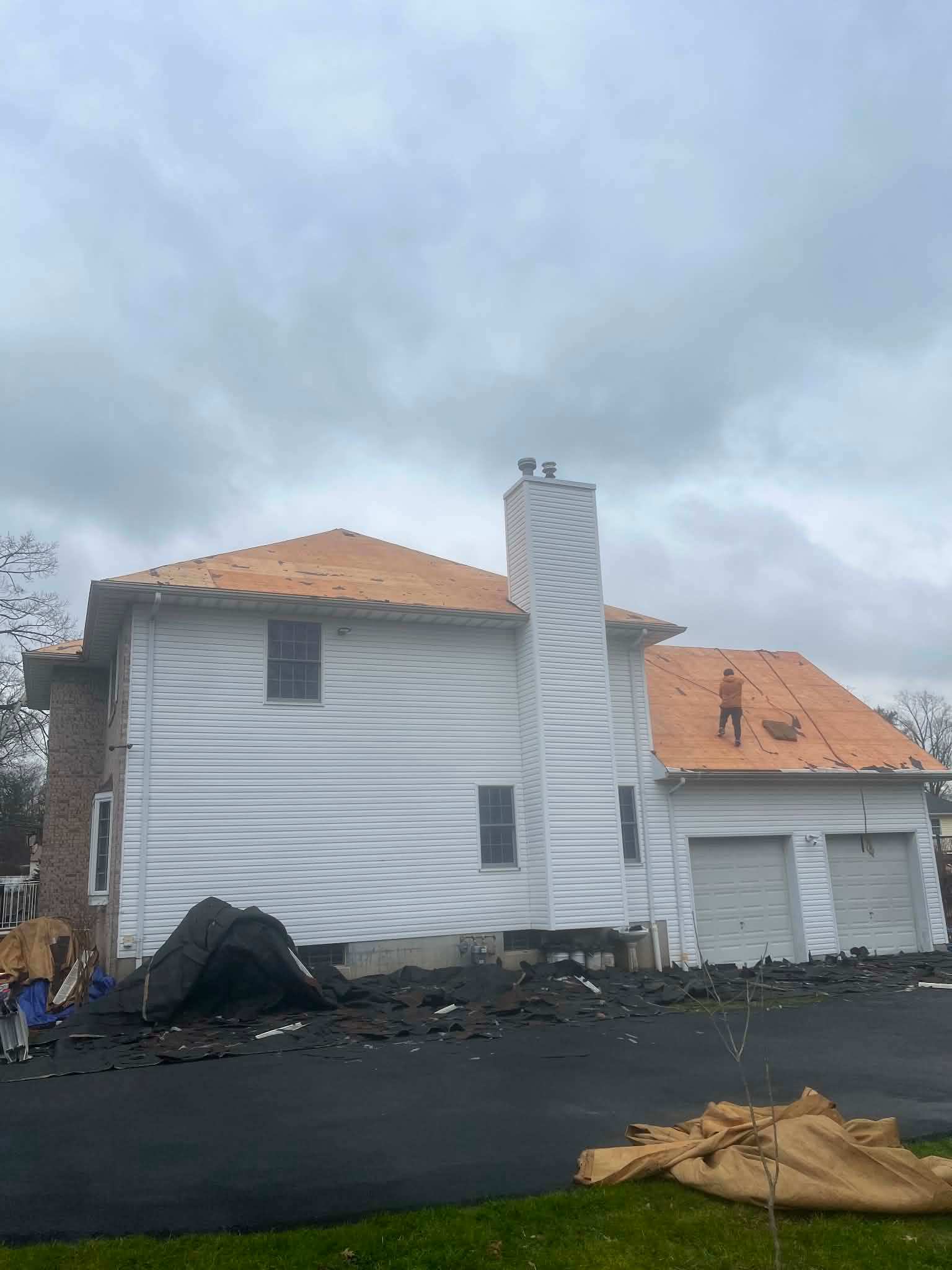
    The stack is dismantled by hand, course by course, down to material that is structurally intact. Hand teardown protects the roof, the flashing, and your landscaping, and it lets us salvage sound brick for reuse where matching matters. The roof surface is protected throughout and the flue is covered whenever the crew is off site.

  3. Rebuild, Flashing Tie-In & Final Inspection

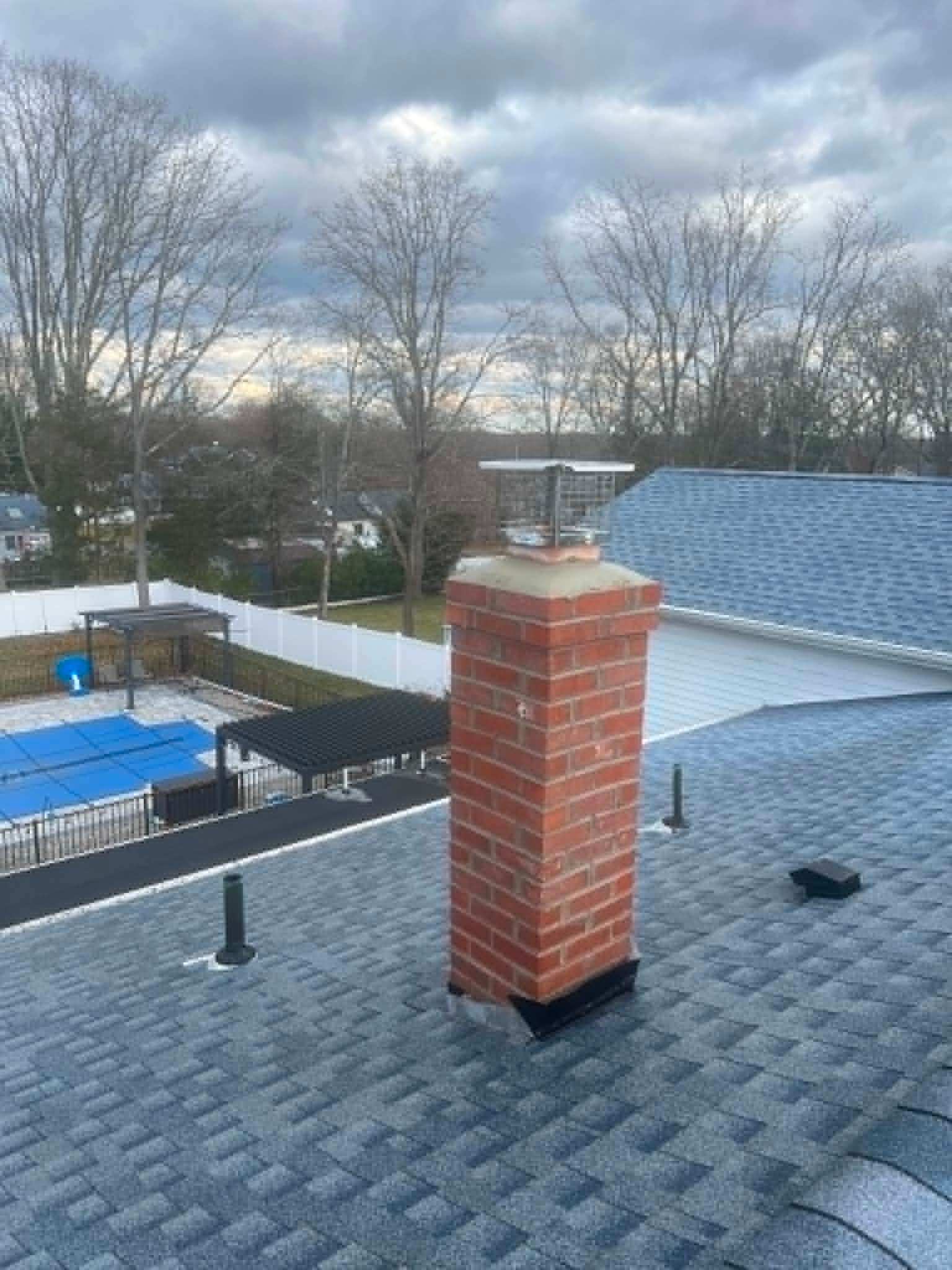
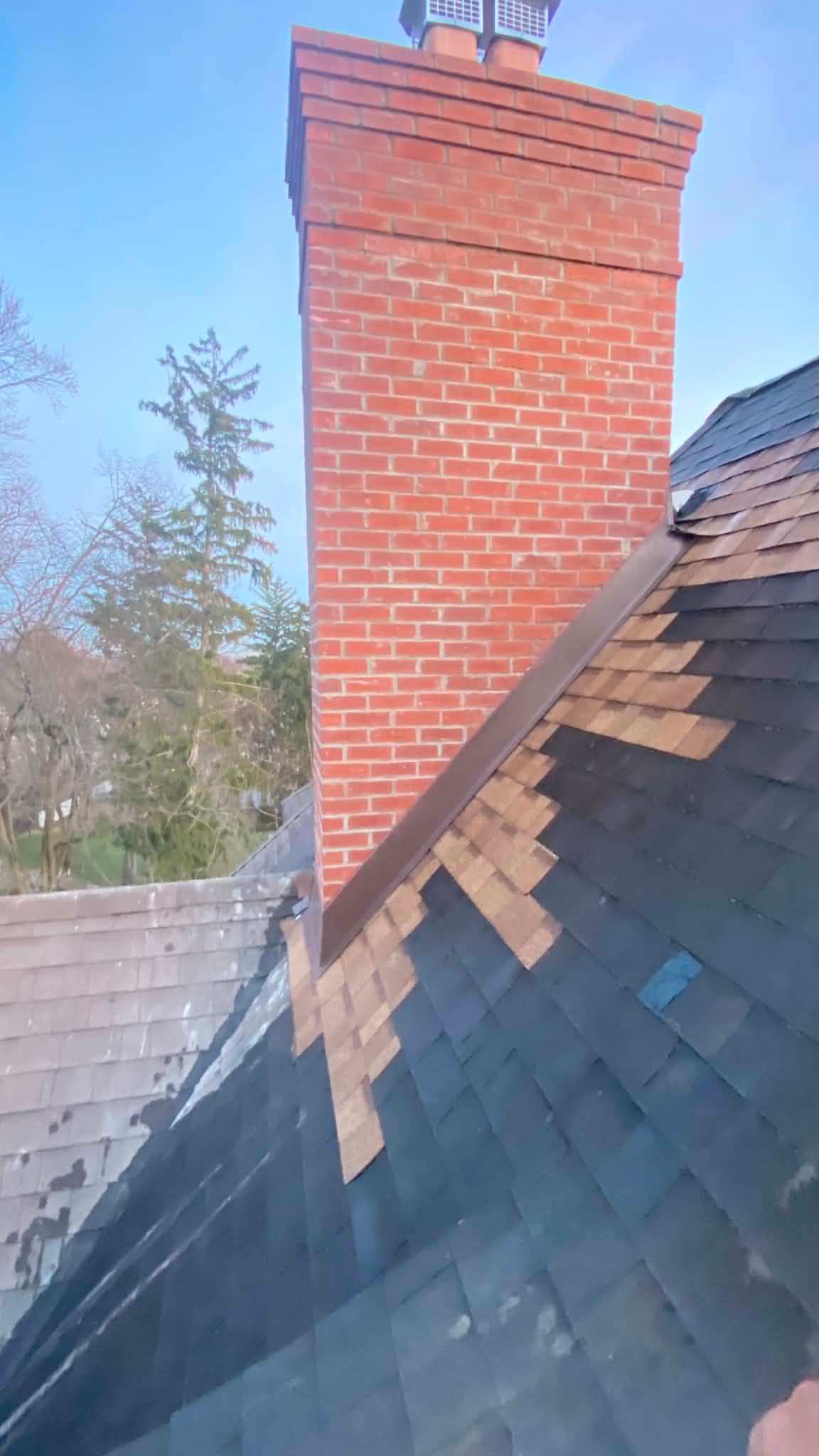
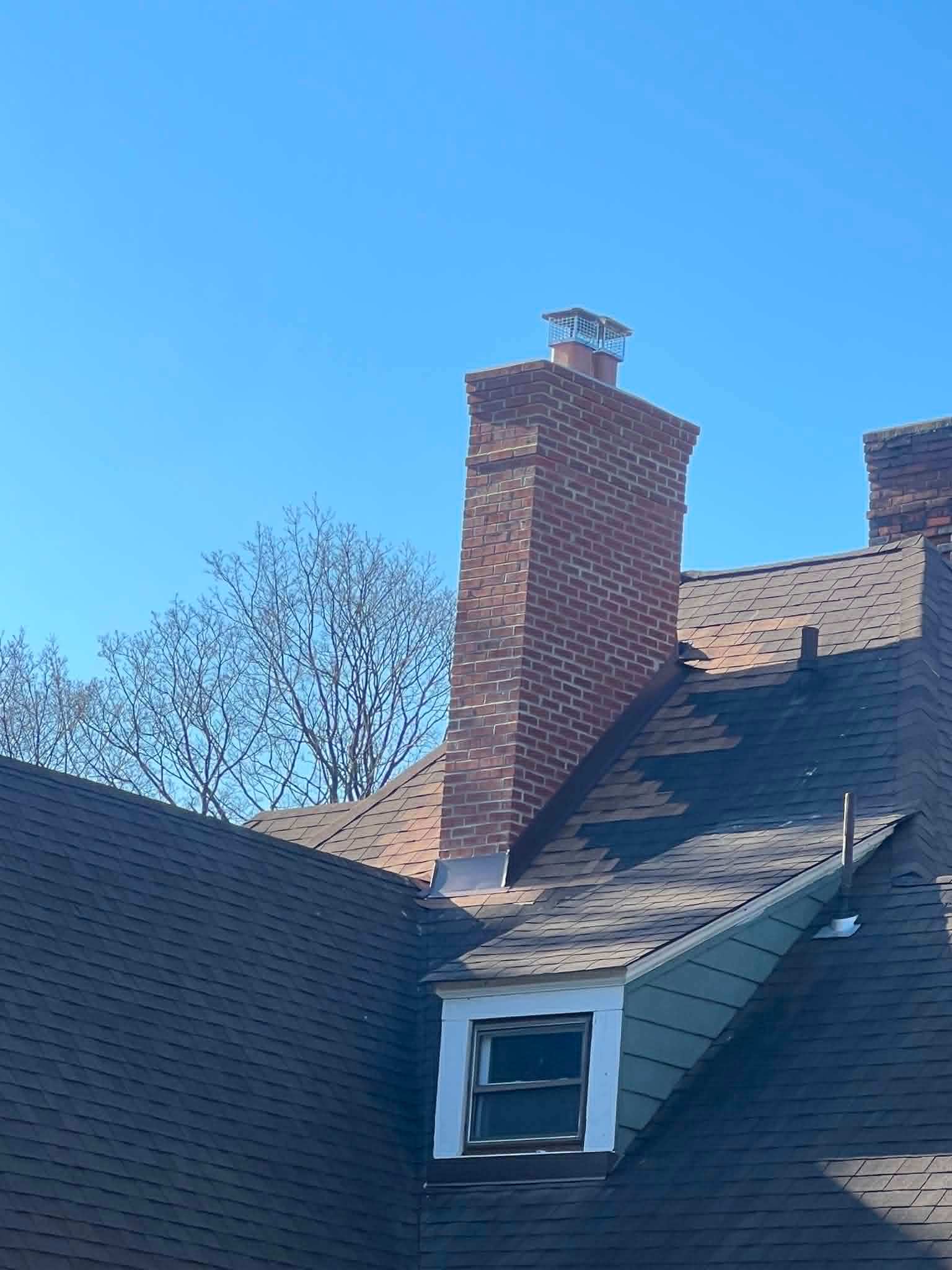
    The chimney goes back up plumb with matched masonry units, then gets a new poured crown, a stainless cap, and new step and counter-flashing woven into the surrounding roof. Where the liner is compromised — which it often is by the time a rebuild is needed — a stainless liner is installed while the stack is open, at a fraction of what it costs to return to later. We meet the township inspector, close the permit out, then walk the finished work with you and show you photographs of every stage. Final invoices match the written proposal.

Investment & Value

What Determines the Cost of a Chimney Rebuild in New Jersey

Chimney rebuild cost is driven by four things: how much of the stack is coming down, what it is being rebuilt with, how hard the chimney is to reach, and what the teardown exposes behind the masonry. A partial rebuild above the roofline and a full-height rebuild that starts below the roof deck are not variations of the same job — they are different projects with different crews, timelines, and numbers.

We do not publish price ranges for rebuilds. A figure quoted without seeing your chimney is a guess, and the guess is always low. A free inspection gets you a written proposal with real numbers — specific to your stack, your masonry, and what we actually find on the roof.

Get an accurate figure
  1. How Much of the Stack Comes Down

    Rebuilding from the roofline up is the most common scope and the least expensive. A full-height rebuild that begins below the roof deck involves opening the roof, working inside the chase, and rebuilding through the structure — substantially more labor, and the single largest driver of the final number. The inspection establishes which one your chimney needs before anything is quoted.

  2. Masonry Unit & Match

    Standard brick, salvaged brick, and cut stone sit at genuinely different price points, and the difficulty of matching your existing masonry matters as much as the material itself. On older New Jersey homes the original units are often out of production, which means either sourcing the nearest available match or salvaging and relaying sound brick from your existing stack.

  3. Height, Pitch & Access

    A chimney on a low-slope ranch and the same chimney on a steep third-story roof are the same masonry and a different job. Staging, scaffold, roof pitch, and the distance material has to be carried all affect labor hours. Access constraints — tight lots, decks, mature landscaping — are assessed at the inspection so they do not surface later as a change order.

  4. What the Teardown Exposes

    Damage concealed by the masonry only becomes visible once the stack is opened: a cracked or missing flue liner, rot in the framing at the chimney chase, or roof deck damage at the tie-in. We photograph anything found, present it as a separate line item, and get your approval before proceeding. You are never billed for work you did not agree to.

Client Experiences

The Standard Speaks for Itself

I had Legacy Peak come out for a chimney repair and they did a great job. They explained everything clearly, showed me what needed to be fixed, and didn't try to upsell anything unnecessary. Danny was awesome to deal with — very down-to-earth and easy to reach whenever I had a question. Would definitely recommend.

Frank Gomez

Chimney Masonry

After dealing with a few other companies that were hard to communicate with and didn't really help fix my issues, I'm really glad I found Legacy Peak Roofing & Construction. They took the time to understand what was going on and clearly explained the best way to handle it. The crew was professional, showed up on time, and got everything done without any hassle. The whole experience was smooth and stress-free, and the quality of the work really shows. Danny the owner was great.

Albina Kica

Roof & Masonry Work

Legacy Peak were the only ones to notice the actual source of the damage on the first inspection. The crew was respectful and polite, and the cleanup was the best I have ever seen. I would definitely recommend them to all my family and friends.

Ehat Kica

Masonry & Roofing

Before You Commit

Chimney Rebuild — Your Questions Answered

The questions New Jersey homeowners ask us most when a chimney has failed structurally — on scope, cost, matching, permits, insurance, and whether a rebuild is genuinely necessary.

How do I know if my chimney needs a rebuild or just a repair?

It comes down to the condition of the masonry units themselves. If the brick and stone are sound and only the mortar joints have weathered, tuckpointing restores the structure and a rebuild would be a waste of your money. If the units are spalling, delaminating, or shifting — or the stack is leaning, cracked through, or leaking into the house — fresh mortar has nothing sound to bond to and the masonry has to be replaced. Our inspection tells you which of the two you are dealing with, in writing, with photographs of what we found.

Can a leaning chimney be fixed, or does it have to come down?

A leaning chimney is a structural failure, and it does not correct itself or stabilize on its own. In most cases the stack is taken down to sound masonry and rebuilt plumb, because the material at the lean point has already failed. What varies is how far down we have to go: some chimneys only need rebuilding from the roofline up, while others have failed at the base and require the full stack. We determine that on site before any number is quoted — and if there is any risk of collapse, we stabilize the structure the same day.

What does a chimney rebuild cost in New Jersey?

The two variables that move the number most are how much of the stack is being rebuilt and what it is being rebuilt with. A partial rebuild above the roofline is a categorically different project from a full-height rebuild that starts below the roof deck, and matching cut stone costs more to source and lay than standard brick. We do not publish price ranges because a figure produced without seeing your chimney is a guess. A free inspection gets you a written, itemized proposal — usually within 24 hours of the visit.

Is rebuilding above the roofline enough, or does the whole chimney need replacing?

Rebuilding above the roofline is often enough, and it is the more common scope. The portion above the roof takes the full weather load — driving rain, freeze-thaw, wind — while the concealed portion inside the house stays dry and typically remains sound for decades longer. A partial rebuild is the right call when the masonry below the roofline is intact and the damage stops above it. If cracking, movement, or water intrusion continues below the roof deck, a partial rebuild would leave the actual problem in place.

Will the new brick match the rest of my house?

We source the closest available match to your existing masonry and show you the unit before it goes up. On older New Jersey homes an exact match is sometimes impossible because the original brick is no longer produced, and in those cases we tell you that at the proposal stage rather than after the work is done. Where matching matters visually, salvaging and reusing sound brick from the existing stack is often the best answer, and we will say so if it applies to your chimney.

How long does a chimney rebuild take?

Most residential rebuilds run two to four working days on site, depending on the height of the stack, access, and whether a liner is being replaced at the same time. Weather governs the schedule more than anything else, since mortar will not cure properly in freezing conditions or heavy rain. Your chimney is never left open to the weather overnight — the flue is covered and the work area secured at the end of each day.

Does homeowners insurance cover a chimney rebuild?

It depends on what caused the failure. Sudden, identifiable events — a lightning strike, a fallen tree, storm damage — are typically covered under standard New Jersey homeowner policies. Deterioration that developed gradually from age and water exposure is generally excluded as maintenance. Legacy Peak photographs and documents every finding at the inspection, which is what an adjuster needs to see when the cause is a covered event.

Do you pull permits for a chimney rebuild?

Yes. Structural masonry work requires a permit in New Jersey municipalities, and we handle the filing and the inspections as part of the project. A contractor who offers to skip the permit is offering to leave you with unpermitted structural work on your property, which becomes your problem at resale.