
Roofing · June 9, 2026
Do You Need a Roof Permit in Monmouth County, NJ?
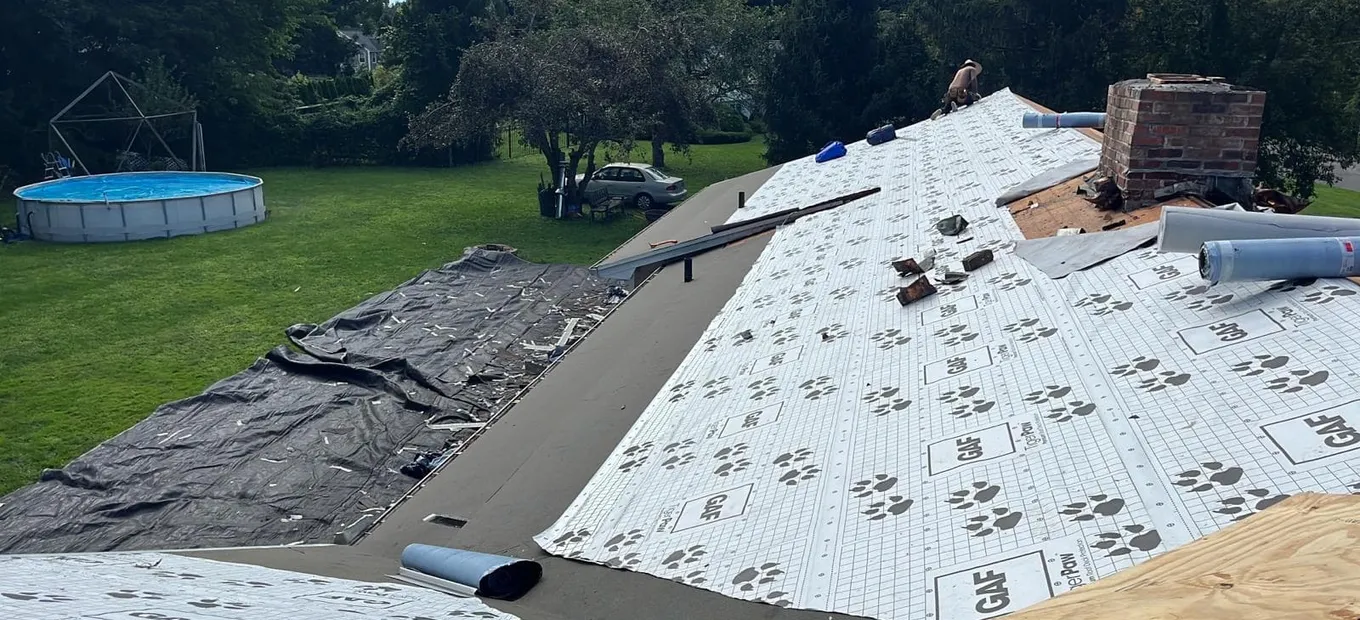
Yes. In Monmouth County, you need a permit to replace a roof. New Jersey law treats a full roof replacement as regulated construction, not simple upkeep, so every town requires the permit before the first shingle comes off. Skip it and you risk daily fines and a roof that can stall your home sale.
Why a roof replacement always needs a permit
Homeowners call us all the time convinced a reroof is “just maintenance.” It isn’t. Under the New Jersey Uniform Construction Code, a full roof replacement is classified as minor work, not ordinary maintenance. That one distinction is what pulls your project into the permit system.
Ordinary maintenance is patching a few shingles or swapping a section of flashing. The minute you tear off and reroof the whole house, the state considers it construction. That holds in Middletown, Howell, Marlboro, and every other town in the county. There is no version of a legal full reroof in New Jersey that skips the permit.
This is also why the contractor matters. A licensed Monmouth County roofing crew builds the permit into the job and handles the paperwork. The guy quoting you cash to “skip the town” is quietly handing you the liability.
What a roofing permit costs in Monmouth County
Here’s where people get tripped up: the permit fee is set by your town, not the county. There is no single Monmouth County rate. Each municipality runs its own construction office and its own fee schedule.
Take Middletown as the anchor example. Their official schedule charges $15 per $1,000 of total project cost for a roofing permit. The math is simple:
- A $15,000 roof carries a $225 permit fee
- A $20,000 roof carries a $300 permit fee
- A $30,000 roof carries a $450 permit fee
Most Monmouth towns price it the same way, with their own per-thousand rate. So when a contractor gives you a number, ask whether the permit is inside the quote or billed on top. A straight contractor will tell you flat out.
The 2-layer rule that can change your whole quote
New Jersey’s residential building code caps a roof at two layers of shingles. That rule decides whether your job is a simple overlay or a full tear-off, and the price gap between the two is real.
If your roof has one layer now, a second layer can be legal. If it already has two, the code requires a full tear-off down to the deck before anything new goes on. No exceptions, no “just one more layer.”
This is why an honest inspection counts the layers before quoting. A contractor who promises an overlay without checking is either guessing or setting you up for a failed inspection. When the inspector finds three layers up there, the work stops and the layers come off on your dime.
The ice barrier code most homeowners never hear about
New Jersey winters drive this next one, and almost nobody knows it exists until an inspector asks for it. The code requires an ice barrier, the self-adhering membrane along your eaves, to extend a minimum of 24 inches inside the exterior wall line of the house.
That measurement is the whole point. The barrier has to reach past the warm wall of the house, because that’s where ice dams form and back water up under the shingles. Run it short and the roof can fail inspection even with brand new shingles on top.
When you compare two roofing quotes and one is noticeably cheaper, this is often where the cheap one cut a corner. The membrane and the labor to set it right cost money. Leaving it out costs you a leak two winters from now.
Your contractor’s license is part of the permit
A permit in New Jersey isn’t just a form. The town will not issue it unless a registered contractor stands behind the work. Your roofer has to submit a valid New Jersey Home Improvement Contractor (HIC) registration from the Division of Consumer Affairs to pull the permit at all.
So the license question answers itself. If a contractor can’t produce a HIC registration number, they can’t legally open a permit. That means either no permit, or your name on the application for work you didn’t perform. Both leave you exposed.
Ask for the HIC number before you sign. A legitimate roofer hands it over without flinching.
What skipping the permit actually costs you
The permit fee is the cheapest part of this whole process. Skipping it is where the real money disappears. Here’s what we’ve watched happen to homeowners who let an unlicensed crew talk them out of it:
- A stop-work order halts the job mid-tear-off, with your roof open to the sky
- The town levies fines that can run daily until the work is brought into compliance
- Unpermitted work surfaces during a title search and freezes the closing on your house
- A buyer’s attorney demands you legalize the roof after the fact, which can mean tearing into finished work
That last one is the killer. Unpermitted roofs have a way of staying invisible right up until you try to sell, and then they cost you a buyer or a chunk of the sale price. The permit you skipped to save a few hundred dollars becomes a five-figure problem at the closing table.
Get it done right the first time
A roof permit isn’t red tape. It’s the paper trail that proves your roof was built to code, by a licensed contractor, and it protects you on the day you sell. Done right, you never think about it again.
If you’re planning a replacement anywhere in Monmouth County, our team handles the permit, the inspections, and the code details from start to finish. See how we approach roof replacement and repair across the county, and get a straight quote with the permit spelled out, not buried.